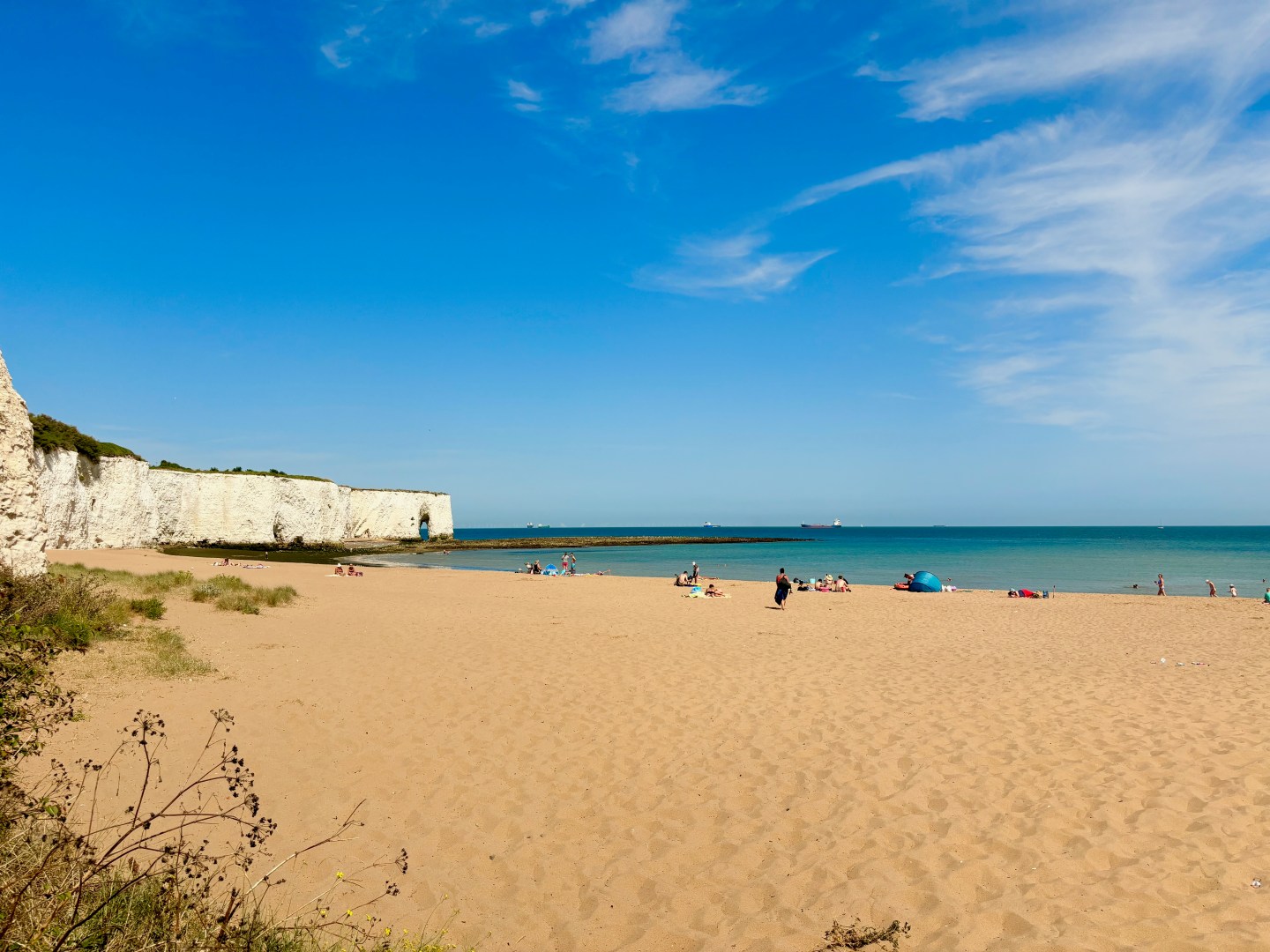
The colour of the sand can be dictated by many factors including the type of rock from which the beach sediments have eroded. The sediment could have come from a nearby source or been transferred across long distances.
Coloured minerals such as magnetite (black) and olivine (green) can influence the colour of sand.
The addition of pollutants and chemicals could change the sand’s colour.
White Sand
Sand made from the mineral quartz will be a pure white colour. When the quartz is mixed with other particles, the white colour will diminish. The more impurities it contains, the less white the colour will be.
Hyams Beach in New South Wales, Australia hold the world record for having the whitest sand of any beach on earth.
Black Sand
The basalt granules that make up the black sand beaches are a result of basaltic rocks that were produced when lava quickly cooled and reached the ocean. These particles are washed on the shore.
Another form of black sand is a glossy combination of fine grains that contain minerals like magnetite which is a magnetic iron oxide mineral.
Pink Sand
Foraminifera are microscopic creatures that give sand its pink hue. These are single-celled organisms that use the minerals in the water to construct shells around themselves. These shells are typically pink/ red in colour and composed of calcium carbonate. The shell remnants of the foraminifera wash up on the coast after they die. These remnants are combined with quartz particles to create the stunning pink sand.
Pink sand beaches can be found in the Bahamas, and Elafonissi on the Greek island of Crete.
Green Sand
When volcanic eruptions produce lava that is abundant in the mineral olivine, the lava cools and crystals of olivine are created. These small fragments are the cause of the green-coloured sand beaches as they gather on the shore.
Papakolea Beach in Hawaii contains green sand.
 Sandgeek